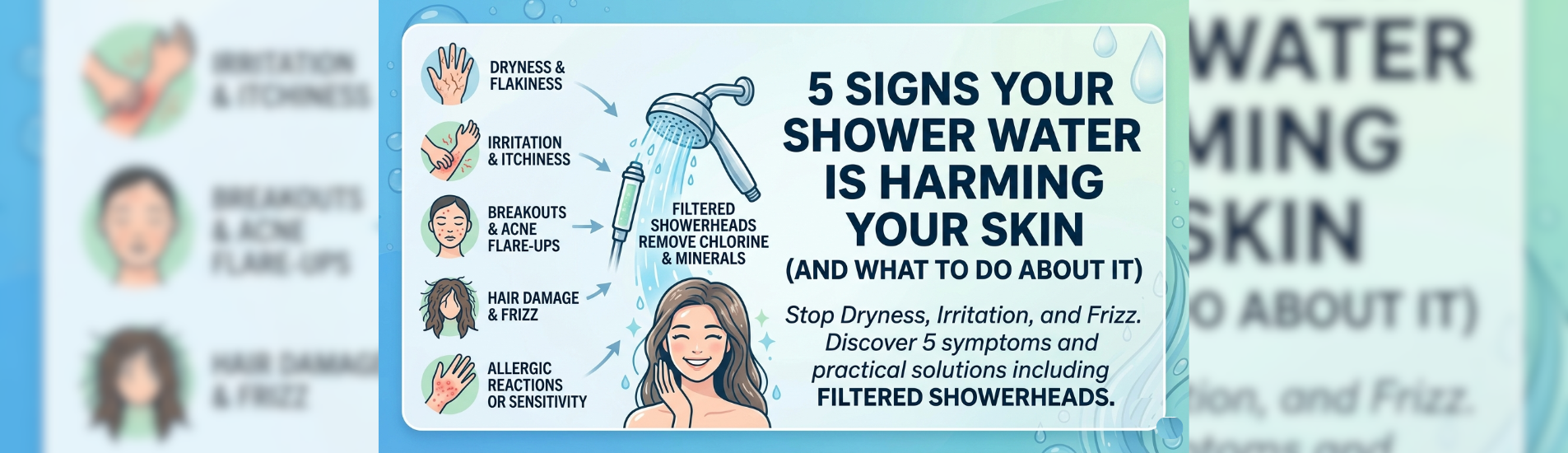
Showering is meant to refresh and cleanse your body, but did you know the water you use every day could be damaging your skin and hair? Many people overlook the impact of tap water, which often contains chlorine, heavy metals, and other contaminants that strip natural oils, cause irritation, and exacerbate skin and hair issues.
Showering is meant to refresh and cleanse your body, but did you know the water you use every day could be damaging your skin and hair? Many people overlook the impact of tap water, which often contains chlorine, heavy metals, and other contaminants that strip natural oils, cause irritation, and exacerbate skin and hair issues. Understanding the signs that your shower water may be harming your skin is the first step toward healthier hair, glowing skin, and a more comfortable bathing experience. In this guide, we’ll cover the five most common symptoms and provide practical solutions, including the benefits of using a filtered showerhead.
Dryness and Flakiness
One of the earliest and most noticeable signs of water-related skin damage is dryness. Tap water, especially hard water, contains high levels of minerals such as calcium and magnesium, which can leave a residue on the skin. Chlorine, commonly used to disinfect municipal water, further strips the skin of its natural oils, leading to a tight, dry feeling after showering.
Dryness can manifest as rough patches, flaking, or a dull complexion. For those with already sensitive or dry skin types, the effects are often more pronounced. The constant loss of natural moisture can also accelerate aging, making fine lines and wrinkles more noticeable over time.
What to Do: Installing a filtered showerhead is a simple solution to reduce dryness. Filtered water removes chlorine, heavy metals, and mineral buildup, helping your skin retain its natural moisture. Using gentle, hydrating cleansers and applying a moisturizer immediately after showering can further protect your skin’s barrier.
Irritation and Itchiness
Another common sign that your shower water is harming your skin is irritation or persistent itchiness. This can occur even if your skin is not visibly dry. Chemicals like chlorine, chloramines, and other disinfectants can trigger redness, burning, or a prickly sensation, particularly for sensitive skin or those with conditions such as eczema or rosacea.
Showering in unfiltered water can also exacerbate inflammatory skin conditions. The combination of hot water and harsh chemicals can compromise the skin’s natural protective barrier, making it more vulnerable to irritation and environmental stressors.
What to Do: Switching to a filtered showerhead helps eliminate these irritants. Additionally, keeping shower temperatures moderate and avoiding prolonged exposure can reduce inflammation. Gentle, fragrance-free skincare products will also minimize further irritation.
Breakouts and Acne Flare-Ups
Many people do not realize that shower water can contribute to acne and breakouts. Chlorine and heavy metals can alter the skin’s pH, disrupt natural microbiomes, and cause excess oil production. For individuals prone to acne, exposure to these water contaminants can exacerbate clogged pores and inflammation.
Hard water minerals can leave residue on the skin, trapping bacteria and dead skin cells, which further increases the likelihood of breakouts. Even after rinsing, these residual particles can continue to irritate the skin, resulting in persistent blemishes.
What to Do: Using a showerhead with a high-quality filtration system can reduce the presence of acne-triggering chemicals and minerals. Pairing filtered showers with non-comedogenic cleansers and skincare routines tailored for acne-prone skin can help maintain clearer, healthier skin.
Hair Damage and Frizz
Shower water doesn’t just affect the skin; it also has a significant impact on hair health. Hard water and chlorine can strip the hair of natural oils, leaving it dry, brittle, and prone to split ends. Hair color can fade faster, and curls may lose definition, resulting in frizz and lack of manageability.
Chlorine and heavy metals can also react with hair products, reducing their effectiveness and leaving residue behind that makes hair feel rough or sticky. People who frequently straighten, dye, or style their hair may notice accelerated damage due to water impurities.
What to Do: A filtered showerhead improves hair texture by removing chlorine and mineral buildup. Using sulfate-free shampoos and deep-conditioning treatments in conjunction with filtered water helps restore moisture, shine, and overall hair health. For curly or chemically treated hair, filtering water can prevent frizz and maintain the integrity of hair treatments.
Allergic Reactions or Sensitivity
For some individuals, water contaminants can trigger allergic reactions or heightened sensitivity. Symptoms may include hives, redness, burning, or swelling after showering. This is particularly common in individuals with already compromised skin or those with chronic dermatological conditions.
Chlorine, in particular, can react with natural oils to form chloramines, which can irritate the skin and exacerbate allergies. Long-term exposure to unfiltered water can make skin more reactive and prone to sensitivity when exposed to other irritants in skincare or environmental pollutants.
What to Do: Filtering your shower water removes chlorine and other irritants, reducing the likelihood of allergic reactions. For sensitive skin, it is important to pair filtered showers with hypoallergenic skincare products and to patch test any new product before full application.
Additional Tips to Protect Your Skin and Hair
While installing a filtered showerhead is the most effective solution, there are other steps you can take to mitigate damage from shower water:
Adjust Water Temperature
Extremely hot water can strip the skin and hair of natural oils, exacerbating dryness and irritation. Opt for warm water instead of hot showers to preserve moisture and protect the skin barrier.
Limit Shower Duration
Long showers can increase exposure to chlorine and other contaminants. Reducing shower time can prevent excessive skin and hair damage.
Use Gentle, Hydrating Products
Cleansers and shampoos that are free from sulfates, parabens, and harsh chemicals help maintain the skin and hair’s natural balance. Look for products with hydrating ingredients such as glycerin, hyaluronic acid, or plant-based oils.
Moisturize Immediately
Applying moisturizer to damp skin helps lock in hydration. For hair, applying leave-in conditioners or oils to damp hair can help protect against dryness and frizz.
Test Water Hardness
Understanding the quality of your tap water allows you to make informed decisions. Simple water testing kits can measure chlorine levels, pH balance, and mineral content.
Why Filtered Showerheads Make a Difference
Filtered showerheads, like those available from JolieSkinCo, are designed to remove chlorine, heavy metals, and other water contaminants that can harm your skin and hair. By reducing these irritants, filtered showerheads:
- Prevent dryness and maintain skin moisture
- Reduce irritation and itchiness
- Help prevent breakouts and acne flare-ups
- Improve hair texture, shine, and manageability
- Minimize allergic reactions and sensitivity
Installing a filtered showerhead is a small investment that provides long-term benefits for your skin and hair. It ensures that every shower is not just cleansing but also nourishing.
Conclusion
The water you shower with every day plays a critical role in the health and appearance of your skin and hair. Dryness, irritation, breakouts, frizz, and sensitivity are all common signs that your shower water may be harming your body. Taking proactive steps, such as installing a filtered showerhead, adjusting shower habits, and using gentle skincare products, can dramatically improve your skin and hair health. Recognizing the signs early and making simple changes ensures that your daily shower leaves you feeling refreshed, hydrated, and radiant.
Filtered showerheads offer a practical solution to a problem many people overlook, transforming your shower from a source of irritation into a beauty-enhancing ritual. By investing in the quality of your shower water, you are investing in the long-term health and appearance of your skin and hair.