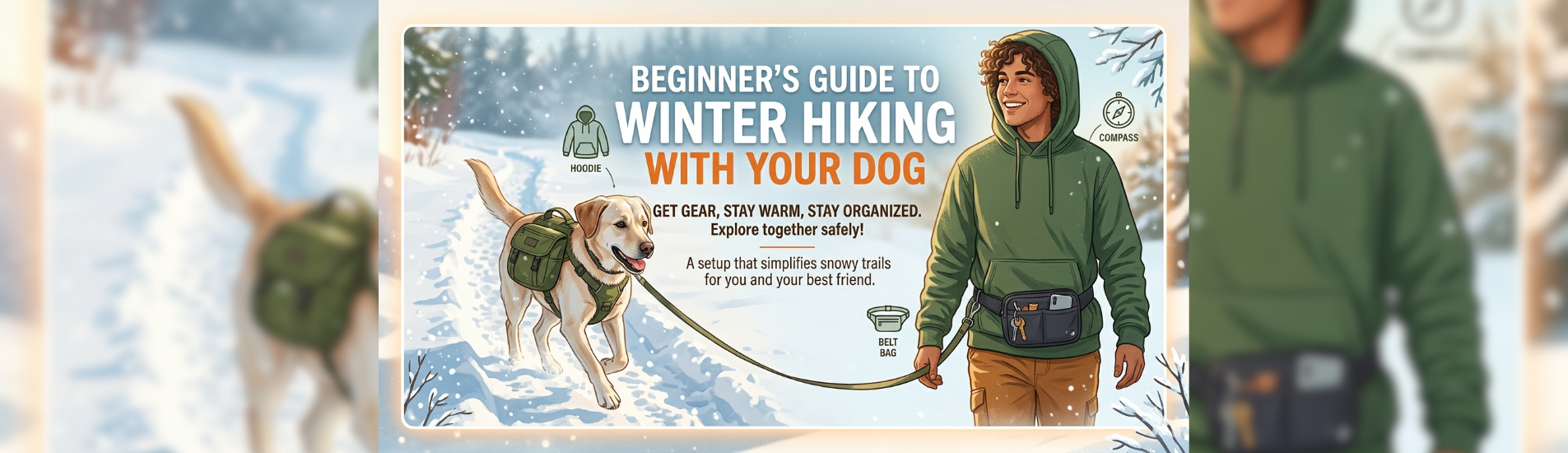
Winter hiking with your dog can be one of the most rewarding outdoor experiences you’ll ever share.
Winter hiking with your dog can be one of the most rewarding outdoor experiences you’ll ever share. Snow-covered trails are quieter, the air is crisp, and your dog often has more energy in cooler temperatures than during summer heat. But cold-weather hiking also requires more preparation, better organization, and the right gear for both you and your dog. This guide is designed for beginners who want to explore winter trails confidently while keeping their dog safe, warm, and comfortable.
From clothing layers to hands-free storage and dog-carried essentials, winter hiking is all about smart planning. With the right setup, you can focus less on logistics and more on enjoying the journey together.
Why Winter Hiking Is Different for Dogs and Humans
Cold temperatures affect dogs and humans in different ways. While many dogs love snow, not all breeds are built for extended exposure to cold. Short-haired dogs, senior dogs, and smaller breeds can lose body heat quickly. Humans, on the other hand, risk sweating during movement and freezing during rest if they do not layer properly.
Winter hiking also adds challenges like icy terrain, shorter daylight hours, and unpredictable weather changes. This makes efficient gear organization essential. A warm hoodie for the hiker, a functional dog backpack harness to distribute weight, and a compact belt bag to keep essentials accessible can make a major difference in comfort and safety.
Choosing the Right Winter Trail for Beginners
If you are new to winter hiking with your dog, start small. Choose well-marked trails with moderate elevation and good foot traffic. Avoid steep climbs, avalanche zones, and remote areas until you gain experience. Urban greenways, forest paths, and multi-use trails that are maintained year-round are ideal starting points.
Check local weather forecasts and trail reports before leaving. Snow depth, wind chill, and daylight hours should factor into your route choice. Always plan a hike that allows you to return well before dark.
Winter Hiking Checklist for You and Your Dog
Preparation begins with a clear checklist. Winter conditions leave little room for improvisation, so having everything organized before you step outside is key.
Clothing Essentials for Dog Owners
Layering is the foundation of winter hiking comfort. Start with a moisture-wicking base layer, add an insulating mid-layer, and finish with a warm outer layer. A durable unisex hoodie designed for outdoor wear works perfectly as an insulating layer that keeps your core warm without restricting movement. A well-fitted hoodie is especially useful during rest breaks when body temperature drops quickly.
Do not forget gloves, a hat, wool socks, and weather-appropriate footwear with good traction. Staying warm yourself allows you to focus fully on your dog and the trail.
Gear Essentials for Your Dog
Your dog should wear a secure harness suitable for layered clothing or fur. A dog backpack harness is especially helpful in winter because it allows your dog to carry lightweight essentials such as collapsible bowls, treats, booties, or even their own jacket. This reduces what you need to carry and keeps your setup balanced.
Ensure the backpack harness fits snugly without restricting movement. Weight should be evenly distributed, and total carried weight should never exceed a small percentage of your dog’s body weight, especially in snowy conditions.
Hands-Free Storage for Small Essentials
Winter gloves, leashes, treats, and phones can quickly become frustrating to manage without proper storage. A belt bag designed for dog walking solves this problem by keeping everything within reach while keeping your hands free. Use it to store poop bags, high-value treats, your phone, keys, and lip balm. In cold weather, being able to access essentials quickly without removing gloves is a huge advantage.
Food, Water, and Hydration
Hydration is just as important in winter as it is in summer. Snow should never replace fresh water, as eating snow can lower body temperature and cause stomach discomfort in dogs. Bring insulated water bottles and collapsible bowls for both of you. Pack calorie-dense snacks for yourself and extra treats for your dog, as winter hiking burns more energy.
Cold-Weather Safety Tips for Hiking With Your Dog
Understanding winter risks is just as important as packing the right gear. Awareness and observation can prevent small issues from becoming emergencies.
Watch for Signs of Cold Stress in Dogs
Pay attention to shivering, lifting paws, slowing down, or seeking shelter. These are signs your dog may be too cold. Taking frequent breaks, adding a dog jacket, or turning back early is always the right decision.
Protect Paws From Snow and Ice
Snow, ice, and road salt can irritate paw pads. Consider dog booties for longer hikes or apply paw balm before and after your trip. Always check paws during breaks for ice buildup or cracks.
Be Aware of Changing Weather Conditions
Winter weather can change quickly. Wind chill can dramatically reduce temperatures, and snowstorms can arrive unexpectedly. Always have a clear turnaround time and stick to it. Let someone know your hiking plan and expected return time.
Keep Leashes Accessible at All Times
Even if your dog is well trained, winter trails may include wildlife, icy drops, or narrow sections. Keeping your leash easily accessible through your belt bag or outerwear pockets helps maintain control without fumbling.
Outfit and Gear Recommendations for Winter Dog Hiking
Having versatile gear allows you to adapt to different trail conditions and temperatures.
A warm hoodie designed for outdoor use provides insulation without bulk and pairs well with heavier jackets when temperatures drop further. It is ideal for layering and works just as well on the trail as it does for post-hike errands.
A dog backpack harness adds functionality without sacrificing comfort. It gives your dog a purpose on the trail while helping you stay organized. Choose one with adjustable straps and breathable materials.
A dog walking belt bag is an underrated winter essential. It keeps your most important items close, reduces backpack clutter, and allows quick access without stopping or removing gloves.
Transitioning From Winter Day Hikes to Weekend Adventures
Once you are comfortable with winter hiking basics, you can start planning more varied weekend adventures with your dog. Different environments require slightly different approaches, but the right gear remains consistent.
5 Weekend Adventures to Take With Your Dog
Weekend trips offer the perfect opportunity to deepen your bond with your dog while exploring new environments. Whether you prefer quiet forests or lively urban parks, thoughtful packing and reliable gear make every adventure smoother.
Forest Trails and Snowy Woodlands
Forest trails are ideal for winter exploration. Trees provide wind protection, and packed snow often creates stable footing.
The hoodie keeps you warm in shaded areas where temperatures drop quickly. The dog backpack harness is perfect for carrying treats, a collapsible bowl, and extra layers for your dog. The belt bag allows easy access to snacks, leash, and phone.
Plan a half-day hike on a loop trail with moderate elevation. Pack water, snacks, a small towel for muddy paws, and a thermos for yourself.
Mountain Lookouts and Scenic Overlooks
Mountain hikes require extra preparation but offer stunning winter views. Cold winds and elevation changes make layering essential.
Wear your hoodie as an insulating layer under a weatherproof shell. Use the dog backpack harness for essentials to keep your personal pack light and balanced. The belt bag is crucial here for quick access to your phone for photos and navigation.
Choose a shorter route with a clear turnaround point. Start early to maximize daylight and always check weather and avalanche conditions before heading out.
Lakeside Walks and Frozen Shorelines
Lakeside trails are peaceful and visually striking in winter. However, safety awareness is critical.
Never allow your dog onto frozen lakes unless ice conditions are officially deemed safe. Stick to marked trails around the shoreline. The hoodie provides warmth during slow scenic walks, and the dog backpack harness can carry water and towels. The belt bag keeps essentials accessible without needing a full backpack.
Plan a relaxed walk with plenty of breaks for photos and hydration.
Urban Parks and City Greenways
Not every adventure requires leaving the city. Urban parks offer maintained paths, lighting, and easy access for winter walks.
The hoodie doubles as a casual layer that transitions well from trail to coffee shop. The belt bag is perfect for city walks, keeping keys, phone, treats, and poop bags organized. The dog backpack harness can still be used for training or longer city walks, helping your dog adjust to carrying light loads.
Plan a flexible route with rest stops and warm indoor options nearby.
Campgrounds and Winter Car Camping Trips
Winter camping is an advanced adventure but incredibly rewarding. Many campgrounds remain open year-round and offer quiet, snow-covered sites.
Layer with your hoodie under insulated outerwear. The dog backpack harness can carry lightweight camp essentials on short walks around camp. The belt bag becomes invaluable for headlamps, multitools, and treats.
Pack insulated bedding for your dog, extra food, and always check campground regulations regarding pets in winter.
Packing Tips for Stress-Free Weekend Adventures
Create a standard packing list that you adjust based on environment and weather. Keep gear organized so you are not scrambling at the trailhead. Practice using all equipment before your trip to ensure proper fit and comfort.
Learning From Real Experiences
Many dog owners report that the right gear completely changes their winter hiking experience. Having hands-free storage, warm layers, and a dog that can carry their own gear makes outings feel easier and more enjoyable. Over time, these small improvements build confidence and allow you to explore further and more often.
Final Thoughts on Winter Adventures With Your Dog
Winter hiking and weekend adventures with your dog are about preparation, awareness, and choosing gear that supports both of you. Staying warm, organized, and adaptable allows you to enjoy the unique beauty of winter landscapes without unnecessary stress.
Start with simple hikes, invest in functional gear, and gradually expand your adventures. With thoughtful planning and reliable equipment, winter can become your favorite season to explore with your dog.