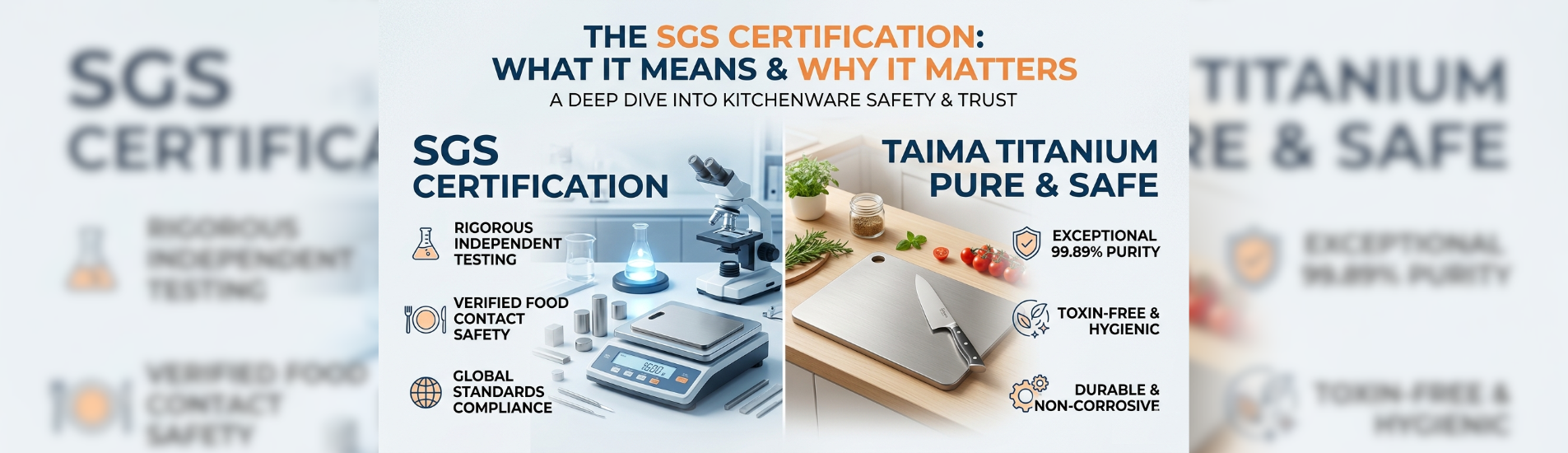
In a world where kitchenware choices are vast and varied, consumers increasingly demand reliable assurances about the safety and purity of the products they bring into their homes.
In a world where kitchenware choices are vast and varied, consumers increasingly demand reliable assurances about the safety and purity of the products they bring into their homes. Third‑party certifications have become a cornerstone of trust and transparency — and among these, SGS certification stands out as a globally respected benchmark. For kitchen tools and utensils, particularly those designed for direct contact with food, SGS certification isn’t just a label; it represents rigorous testing and validation that products are safe, pure, and compliant with international standards. This blog explains what SGS certification is, why it matters for kitchenware safety, and how Taima Titanium products meet these stringent requirements.
What Is SGS Certification?
The Role of SGS
SGS (Société Générale de Surveillance) is one of the world’s leading inspection, verification, testing, and certification companies. With an extensive global network of accredited laboratories and experts, SGS evaluates products across vast industries to ensure they meet rigorous safety, quality, and regulatory standards. SGS is widely recognized as the global benchmark for integrity, impartiality, and technical excellence.
SGS in the Context of Kitchenware
When applied to kitchen and dining products, SGS testing and certification assess material composition, food contact safety, and compliance with applicable international regulations. This may include analysis under U.S. FDA requirements (such as FDA CFR 21 Parts 175‑189), California Proposition 65 limits, and European standards for food contact materials and safety. SGS also evaluates performance and hygienic aspects relevant to cookware, tableware, cutlery, and related kitchen tools.
Independent Validation Versus Manufacturer Claims
Unlike internal quality claims made by manufacturers, SGS certification comes from an unbiased third party. Products tested and certified by SGS have undergone objective assessment using standardized methods and accredited processes. This independent verification builds consumer confidence that the product’s advertised attributes — such as purity, toxin‑free composition, and safety for food contact — are factual rather than marketing language.
Why SGS Certification Matters for Kitchenware
Ensuring Food Safety and Health Protection
The primary reason SGS certification is critical for kitchenware is safety. Materials used in direct contact with food can significantly impact health, especially if they contain harmful substances like lead, BPA, cadmium, or unsafe metal alloys. SGS testing evaluates whether kitchen products release any hazardous chemicals or contaminants under typical use conditions. Products that pass these assessments provide assurance they will not leach harmful substances into food, protecting consumers from potential health risks.
Providing Compliance With Global Standards
Kitchenware today is not only sold locally but often across borders. Different countries have varying regulatory requirements for materials that touch food. SGS certification confirms that a product complies with internationally recognized food contact safety guidelines, helping brands navigate complex legal frameworks and allowing consumers worldwide to trust the product’s compliance. This global compliance is especially important for products sold in international markets.
Boosting Consumer Confidence and Brand Credibility
Consumers are understandably cautious about products that interact with their food and health. SGS certification signals that a product has met rigorous third‑party criteria, thereby increasing credibility, trust, and perceived quality. This certification can be a deciding factor for buyers choosing between competing kitchenware brands. Knowing that an independent authority tested and verified a product’s safety and purity gives customers peace of mind when making purchase decisions.
Differentiating Real Quality From Counterfeits
The kitchenware market includes many products that may claim quality or safety but lack verifiable evidence. SGS certification helps distinguish genuine products from imitations and inferior imitations that can contain unsafe materials. Certification provides a clear, documented basis upon which consumers can evaluate claims of purity, food safety, and performance.
What SGS Certification Involves
Testing and Analysis
At its core, SGS certification involves extensive laboratory testing. Materials and finished products are analyzed to determine their chemical composition, ensuring no harmful impurities or contaminants exceed established limits. For kitchenware, specific tests verify suitability for food contact, including checks for heavy metals, unapproved additives, and potential migration of substances under typical cooking conditions.
Verification of Manufacturer Claims
SGS doesn’t simply test samples in isolation; it also examines whether products are manufactured consistently and according to documented processes. Independent evaluations may include inspections of production facilities, review of quality management systems, and audits of compliance with relevant standards. This comprehensive approach ensures the final product reflects the quality and safety that was tested and certified.
Certification and Documentation
Once testing and verification are complete, SGS issues formal documentation — often referred to as a certificate or report. This documentation provides detailed results from the testing process and can include specifics such as purity percentages, compliance conclusions, and applicable standard benchmarks. SGS certificates are often requested by importers, retailers, and regulatory agencies as proof of product safety and compliance.
How Taima Titanium Meets Rigorous SGS Standards
Pure Titanium with Certified Composition
Taima Titanium proudly holds SGS certification verifying that its titanium products, including cutting boards, are made from exceptionally high‑purity titanium — typically around 99.89% pure. This high degree of purity ensures the material is free from harmful contaminants, heavy metals, and additives that could compromise safety when in contact with food.
Assurance of Toxin‑Free, Safe Kitchen Tools
SGS testing confirms that Taima Titanium products are non‑toxic and safe for everyday kitchen use. Unlike materials that can leach chemicals or hazardous compounds, pure titanium verified by SGS is inert and stable, making it safe for food contact in a home kitchen. This testing is essential for health‑conscious consumers who prioritize toxin‑free kitchen environments.
Protection Against Unsafe Imitations
As the popularity of titanium kitchenware grows, so does the prevalence of misleading products marketed as “titanium” but made with inferior metals or coatings that lack genuine safety credentials. Taima’s SGS certification provides verifiable proof that its products are made from authentic, high‑purity titanium — offering a reliable alternative to uncertified imitations that might contain unsafe alloys.
Global Food Contact Compliance
In addition to purity and safety validation, SGS certification supports Taima’s claims of compliance with food contact regulations in major markets. This aligns with regulatory frameworks like the U.S. FDA’s food contact requirements and other international standards, reinforcing Taima products’ suitability for global distribution and use.
Real‑World Benefits for Consumers
Health and Well‑Being
Certified titanium kitchen tools provide a health advantage over materials that can degrade or release unwanted substances during use. Titanium’s inert nature, confirmed through SGS testing, means it won’t react with food, ensuring that what you prepare is free from unexpected contaminants.
Enhanced Durability and Performance
Beyond safety, purity certification can also correlate with performance. High‑purity titanium verified by SGS tends to be more durable and retains desirable physical properties over time, such as resistance to corrosion and wear. Consumers who invest in SGS‑certified titanium products often enjoy longevity and reliable performance.
Peace of Mind With Every Use
Every certified product carries a documented history of testing and validation. For many home cooks and professional chefs alike, having that assurance translates into confidence — whether preparing a family meal or hosting guests. Knowing that your kitchenware has been independently verified for safety makes the cooking experience more enjoyable and reassuring.
Conclusion: Certification That Matters
SGS certification represents more than a label — it is a testament to product safety, material purity, and global standards compliance. For kitchenware, where food contact and long‑term use intersect with health considerations, SGS certification offers consumers a vital benchmark of trust. Taima Titanium’s commitment to SGS‑verified purity and safety ensures that you can bring these products into your kitchen with confidence, knowing they have undergone rigorous testing and meet international expectations for quality and food contact safety.
If you’re evaluating kitchenware options, prioritize products backed by transparent, third‑party certification like SGS. It’s not just a certification — it’s peace of mind.